

2 min read
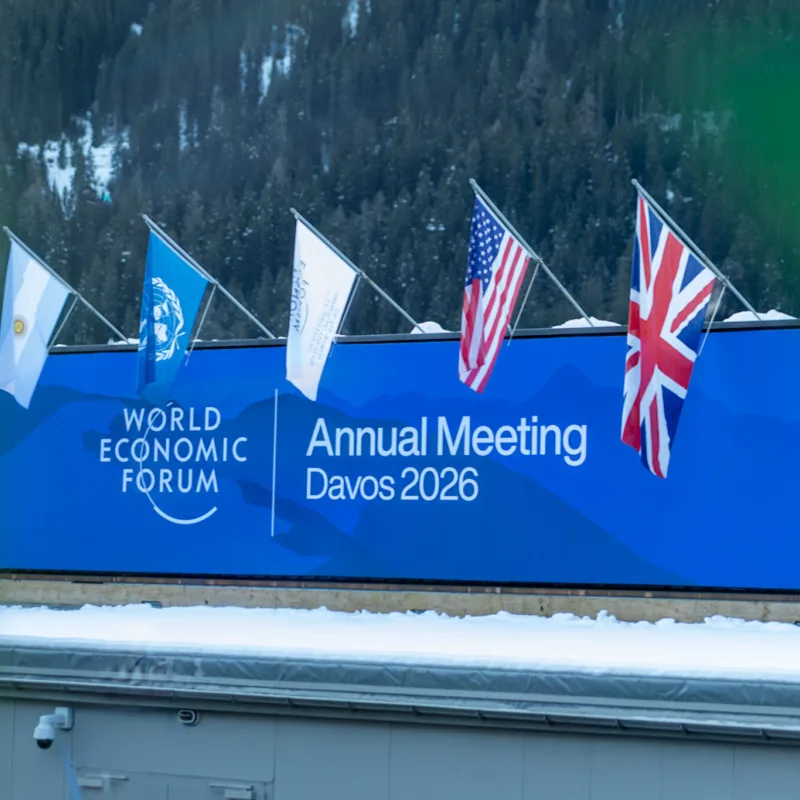
While Donald Trump and Greenland grabbed the headlines last month at Davos, the more interesting story for me was what emerged from discussions in quieter rooms and side conversations.
Because beneath the noise, the Aspect team has been looking closely for clear signals about how senior leaders are now reframing the energy agenda. And if you’re running, funding, regulating or campaigning around energy in the UK, those signals matter.
Here are five questions we think UK energy boards should be asking themselves – sooner rather than later.
1. Are we exposed to changes in political tone, not just policy?
At Davos, Net Zero was talked about less as a moral imperative and more as an energy security / cost-of-living issue. That matters, because when politicians change how they talk about Net Zero, policy shifts usually follow – through slower timelines, tighter spending or softer enforcement. If your strategy depends on today’s political language staying intact, that’s a risk worth stress-testing.
2. Are we still assuming the transition is a straight line?
In private, investors were frank: grid delays, planning bottlenecks and skills shortages are now “baked in”. If you’re still assuming smooth delivery and perfect alignment, you may be planning for a world that no longer exists.
3. Do we know who really holds influence now?
Insurers, lenders and ratings agencies had as much to say about energy outcomes as ministers. When insurers talk openly about withdrawing cover, or lenders price in regulatory uncertainty, that is policy – just by another route.
4. Are we shaping the energy security debate or being shaped by it?
“Energy security” was everywhere at Davos – but it meant wildly different things. For some, it was domestic supply. For others, grid resilience and interconnection. If your organisation isn’t crystal clear where it stands, someone else will define it for you.
5. Does our public story still match delivery reality?
There was noticeably less talk of heroic timelines this year. More realism. More caveats. Over-promising now carries reputational risk – especially when planning delays and grid queues are common knowledge.
The takeaway?
Davos didn’t change UK energy policy. But it did strongly reflect a wider shift in the way policy is being debated, defended and delivered.
While the energy transition isn’t stopping, it is getting choppier and more political.
And that means boards and company leaders need to be politically tuned-in, fluent and agile, not just technically right.
Image credit: Copyright: World Economic Forum/Chris_Heeney