


4 min read
AI continues to reshape the global economy at dizzying speed. But behind the breakthroughs lies a fundamental truth: the future of AI will be decided not just by algorithms, but by who can supply the power.
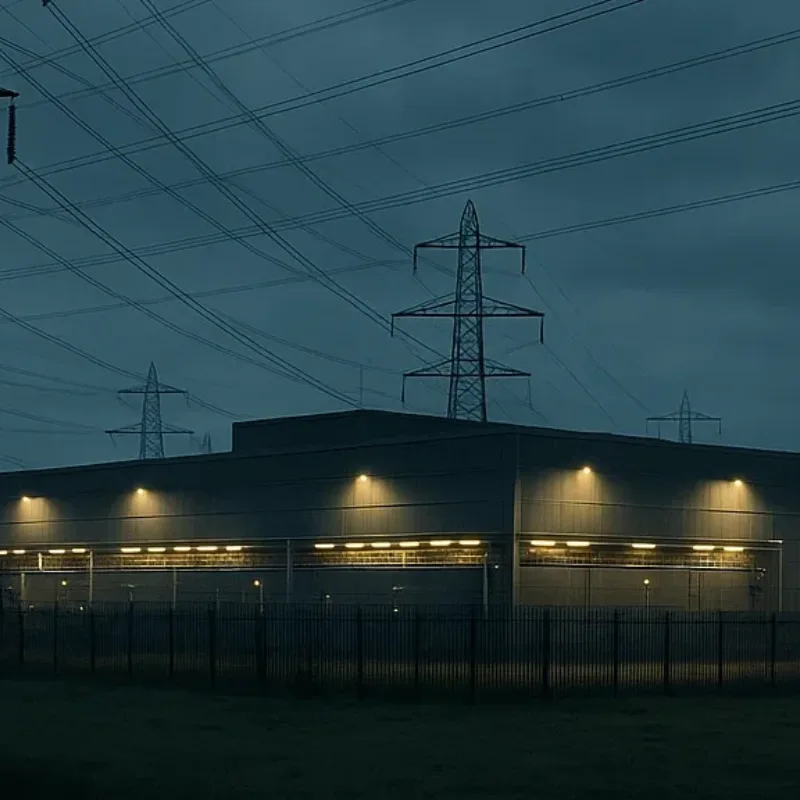
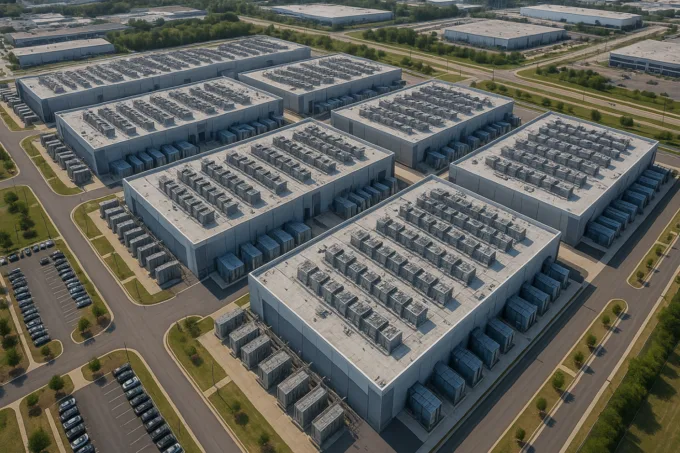
Modern AI data centres are vast industrial facilities, drawing tens or hundreds of megawatts. The International Energy Agency warns that global AI-related electricity use could approach Japan’s national consumption by 2035. Countries that can plug these centres in quickly – at stable, affordable prices – are becoming magnets for investment and innovation.
The UK has enviable strengths in research, talent and market demand. But these collide with longstanding structural constraints: grid connection delays, higher energy prices and an insufficient scale-up of firm, clean generation. Without sustained action, Britain could drift into becoming a consumer of AI rather than a producer.
Yet momentum is beginning to shift.
A global race - and the countries pulling ahead
The US: scale, speed and investment
America’s vast grids, lower energy prices and federal incentives have triggered a data-centre boom. States like Texas and Georgia are fast-tracking permits, expanding transmission and channelling billions into new generation – explicitly positioned as competitiveness measures for the AI era.
The Nordics: abundant clean power
Finland, Sweden and Norway offer plentiful low-carbon electricity, cool climates and long-term regulatory certainty. Grid connections measured in years rather than decades have become a defining advantage.
The Gulf: energy-backed ambition
Saudi Arabia, Qatar and the UAE are leveraging their energy advantage to build mega-campuses for AI, underpinned by large-scale solar, gas capacity and fast-track planning regimes.
Across these regions, the message is consistent: energy infrastructure is a strategic asset in the AI economy.
Where the UK stands - and what’s changing
The UK remains one of Europe’s largest data-centre markets, and global operators still view it as strategically important. But three constraints have held back growth though one of them is now starting to shift.
1. Gridlock at the connection point – now with a clearer reform path
The UK’s grid queue has stretched into the 2030s, creating a fundamental barrier for AI infrastructure. For AI data centres – which need power first and planning second – this is a critical barrier.
However, the National Energy System Operator's (NESO) grid-connections reform announced on 8 December marks a meaningful turning point. The reform replaces the old ‘first come, first served’ system with a pipeline that prioritises deliverable, shovel-ready projects and future strategic loads such as data centres.
Early batches of projects will begin receiving firm offers from December onwards, with remaining offers completed by 2026 – a timeline that, if delivered, will materially strengthen confidence in the UK’s ability to power digital infrastructure.
This does not eliminate the grid challenge, but it finally begins to bend the curve in the right direction.
2. Higher and more volatile energy prices
The UK remains more exposed than key competitors to wholesale price volatility. For AI operators running tens of thousands of chips, this is not a marginal concern. Longer-term market reforms and increased domestic low-carbon supply will be critical to restoring competitiveness.
3. Slow expansion of firm, clean power
The UK has world-leading offshore wind but still lacks sufficient firm, low-carbon generation. While others move rapidly on nuclear, geothermal and storage, the UK continues to debate delivery models. Progress here remains essential but the NESO reform provides a more reliable pathway for connecting new power once built.
The emerging picture is more balanced than before: challenges remain, but the first structural reforms needed to support AI infrastructure are now underway.
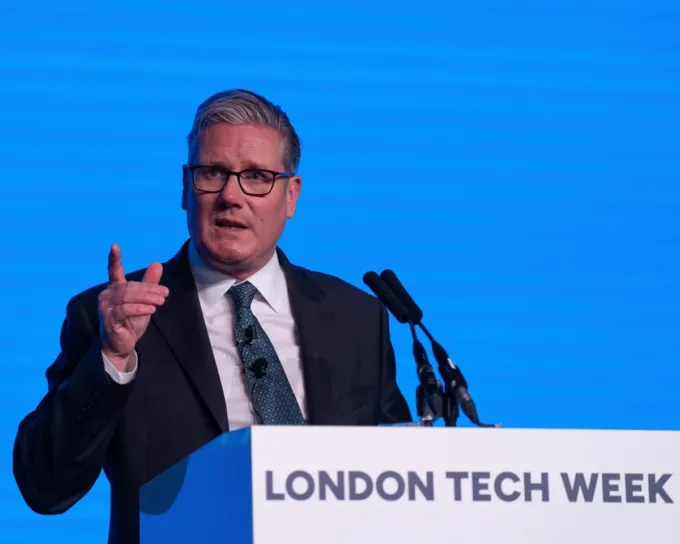
Prime Minister Keir Starmer outlines the UK's AI ambitions at London Tech Week. Credit: The Guardian
Watt now? The role of narrative
Infrastructure takes time to build. Narratives, fortunately, do not.
Until now, Britain’s messaging to investors and operators has been inconsistent: a mixture of ambition, caveat and confusion. This is not helpful for a country that needs global tech companies to commit billions to long-term assets.
But the NESO announcement offers an opportunity to reset that narrative: to show that the UK is addressing foundational issues, not merely acknowledging them.
Strategic communication can help close the credibility gap by:
- Articulating a national electricity strategy for AI – making clear that power for data centres is not a niche technical issue but a competitiveness priority.
- Setting out transparent milestones for grid reform, transmission upgrades and new generation.
- Designating and communicating priority zones, especially where offshore wind meets land or where industrial clusters already have strong grid infrastructure.
- Projecting stability and seriousness to global technology firms deciding where to place billion-pound assets.
Conclusion: The power to choose our AI future
None of the UK’s challenges are irreversible. The country still has deep competitive strengths: a sophisticated digital economy, world-class talent, respected regulators and cross-party recognition that technology matters.
With the NESO grid-connections reform now signalling a more investable, delivery-focused approach, the UK has taken a meaningful first step toward solving the power bottleneck that threatens its AI ambitions.
But momentum must be sustained. If Britain continues to accelerate grid reform, stabilise power prices, expand low-carbon generation and communicate its intentions with clarity, it can still position itself as an attractive home for AI infrastructure – not merely a buyer of foreign compute.
The decade ahead belongs to countries that pair abundant electricity with administrative urgency. The UK has begun to move in that direction. The question now is whether it will keep going fast enough to lead rather than follow.