



4 min read
The communication environment facing UK energy organisations is undergoing a fundamental shift. Companies are no longer judged simply on how well they defend their reputation but on how effectively they demonstrate their role in advancing the public interest.
In a sector often caught up in polarised debates – such as oil and gas versus renewables - communicators must now show that they are part of a future-looking transition, not defined by the arguments of the past.
Across the board, expectations are rising. Stakeholders want evidence that decarbonisation efforts are real, not rhetorical. Communities in transition want to hear their own voices reflected in the narrative, not just corporate and government interpretations of what a “just transition” should look like. And policymakers and industry partners expect companies to step into collaborative leadership rather than limit themselves to reactive commentary.
These pressures are reshaping what strategic communication means in 2026. It is no longer enough to craft compelling stories; organisations must anchor those stories in verifiable action, authentic community engagement, and coalition-building that shows they understand their interdependence with society, government and the wider energy ecosystem.
The trends shaping this new landscape are not standalone developments. Together, they signal the emergence of a more mature, values-led form of strategic communication.
1. Hyper-transparent climate communication
From ESG storytelling to evidence-led climate narratives
Climate communication in 2026 will demand more than confident statements and polished sustainability reports. The sector is entering a period where every climate claim must be scientifically grounded, auditable and independently verifiable. With increasing regulatory creep, investor scrutiny and activist pressure, communication teams can no longer focus on shaping perception alone - they must help organisations prove their progress.
What this means for communication teams
- Communication teams must work closely with technical colleagues – including engineers, technical specialists and data analysts – to translate complex emissions data, transition pathways, methane profiles and lifecycle analyses into credible, digestible public narratives. We must be given access to those individuals. Doing so, will improve the outcome of any activity.
- Communication must be aligned to science-based evidence, not corporate aspiration. Every climate claim should be third-party verifiable to minimise greenwashing risk.
- Engagement materials should shift from ambition-based storytelling to evidence-based explanation, showing how decisions are made, what progress has been achieved – and where gaps remain.
- Accuracy and openness will become central to trust-building, requiring communication teams to champion transparency even when messages are uncomfortable.
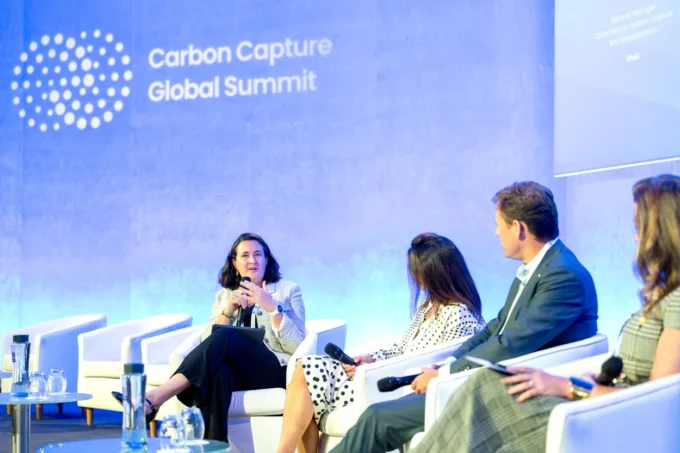
Case in point: OGCI and the move toward verifiable climate narratives
OGCI’s approach to its 2025 Progress Report exemplifies this new transparency-first model. Rather than relying on broad commitments, OGCI has focused on producing clear, measurable and externally assessable disclosures across methane reduction, CCUS deployment and collective industry efforts.
This was further strengthened by a spotlight on activity underway by its 12 member companies, demonstrating the power of collaboration and real progress. The communications strategy underpinning the report is rooted in openness: ungated data access, pre-launch media engagement and 121 engagement with key stakeholders, executive Q&A packs, and an intentional emphasis on “how” emissions are reduced rather than simply announcing figures.
This level of credibility - where communication is built on data, verification and consistency - will define effective climate narratives in 2026.
2. Community-centric storytelling in Just Transition zones
Elevating local voices through co-created, place-based narratives
As communities grapple with the lived realities of the energy transition, strategic communication must become local, participatory and rooted in everyday experience. The just transition is no longer abstract; it is visible in infrastructure plans, skills development, industrial change and community expectations.
What this means for communication teams
- Communication teams need to co-create narratives with local communities, workers, young people and supply-chain SMEs – not simply broadcast messages to them.
- Place-based storytelling must become central, drawing on authentic voices and lived experiences to build legitimacy and trust.
- Communication must acknowledge concerns around fairness, economic impact and local identity, ensuring messages focus on economic justice and opportunity.
- To strengthen trust, teams must work closely with local media, community leaders, grassroots organisations and regional influencers, especially where mainstream media coverage is inconsistent.
- Messaging should be grounded in transparency about benefits and trade-offs, emphasising that communities are partners in transition rather than passive recipients – people need to see themselves in the narrative..

Case in point: Inverness & Cromarty Firth Green Freeport (ICFGF)
ICFGF’s approach shows what this community-first model looks like in practice. The strategy recognises the gap between high-level narratives and what residents want to know: how the freeport will affect their jobs, families, costs and opportunities. In response, ICFGF has built its communication around human stories – apprentices, small business owners, port workers – alongside clear, accessible educational content explaining how a green freeport actually works.
In a flagship year which saw the freeport agree a formal framework for co-operation and responsibilities between itself, the UK and Scottish Government and the Highland Council, the team has also invested heavily in myth-busting to counter organised opposition and misinformation, while strengthening its footprint in trade media to reach investors and renewable-energy specialists.
The result is a communications model that aligns local legitimacy with national and industry credibility – a template for just transition storytelling in 2026.
3. Reputation building through strategic collaboration and policy leadership
Why communications, public affairs and stakeholder engagement are converging
The energy transition is increasingly shaped by policy dynamics, regulatory shifts and social expectations. Companies that communicate only from the sidelines will struggle to retain influence. In 2026, organisations must demonstrate that they are constructive partners in shaping the policy frameworks and coalitions required to deliver decarbonisation.
What this means for communication teams
- Communication must evolve beyond brand promotion into systemic influence, showing how organisations contribute to solving shared challenges such as grid equity, climate adaptation and industrial transition.
- Credibility will come from who you collaborate with - NGOs, academic institutions, youth voices, community networks and cross-sector partners - not just what you say.
- Communications teams must operate as a unit, reflecting the reality that media shapes politics and politics shapes media.
- They need to articulate their organisation’s role in shaping policy rather than simply reacting to it, positioning their company as a constructive leader in the transition.
- Storytelling must focus on collaboration, coalition-building and transparency to demonstrate long-term commitment and national relevance.

Case in point: Grangemouth’s Just Transition and the Acorn CCS project
Grangemouth provides one of the clearest examples of reputation built through collaboration. Rather than allowing the refinery closure to define the narrative, extensive engagement across government, industry, unions and the community reframed it as a pivot to a clean industrial future. Over 100 stakeholder engagements, a compelling storytelling campaign centred on local voices, and the development of a credible Just Transition Plan created a shared sense of purpose.
Similarly, the Acorn CCS project’s £200m funding moment was enabled by years of meticulous, strategically aligned communication that built trust across political, investor and media audiences. Both projects demonstrate how, in 2026, reputation will belong to organisations that combine policy fluency, transparent storytelling and genuine coalition-building.
Conclusion: The new rules of energy communication
In 2026, communication in the energy and decarbonisation sectors will demand:
- Radical transparency
- Community-centred narratives
- Cross-sector collaboration and policy fluency
- Evidence-led messaging that avoids spin
- Campaign build around real people
Energy companies must demonstrate that they are part of the future, not stuck debating the past. Those who embrace this shift early - communicating with clarity, credibility and humility - will be the ones who win trust, attract investment and build resilience in a fast-changing environment.
If you’d like to discuss how these trends affect your organisation - or how Aspect can help you build credible, future-fit communication strategies - our team would be delighted to support you.