



8 min read
Across the energy sector, “moving to the right” has become a polite way of describing a much tougher commercial reality.
The evidence is everywhere: projects are not disappearing, but they are slipping; consents are taking longer than expected; grid connections are being pushed out; customers are delaying investment. On paper, the opportunity remains intact. In practice, the timing, risk and value attached to that opportunity have changed.
When enough projects move right, the pressure travels through the system. It means supply-chain businesses have to wait longer for revenue while investors reprice risk. Owners who expected a clean exit find themselves holding assets for longer in a market asking tougher questions.
For companies preparing for sale in energy and energy services, this changes the nature of M&A readiness. The question used to be: how do we present this business as well as possible? Now, the question is: does our value story still work in the current market conditions?
The danger of selling last year’s story
Many energy businesses built their story around assumptions that felt reasonable at the time: rapid deployment, growing pipelines, faster offshore wind development, expected hydrogen investment, or a clearer route from ambition to activity than the market is now delivering.
Those themes remain strategically important. The energy transition has not gone away. But urgency does not remove friction.
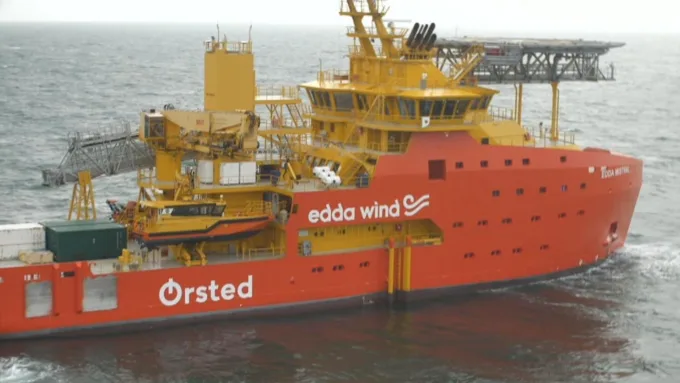
Recent years have shown how quickly project economics can move. Vattenfall stopped development of Norfolk Boreas in its previous form after saying costs had increased by up to 40%. Ørsted discontinued Hornsea 4 in its current form, citing supply-chain costs, higher interest rates and increased execution risk.
Scotland has its own versions. The West of Orkney Windfarm, off the north coast of Scotland, has been paused amid concerns that high transmission charges and connection costs make the project financially unviable under current rules. Scottish Renewables has also warned that Transmission Network Use of System charges represent a direct risk to future investment in Scottish generation.
It’s not that the energy opportunity has weakened. Instead, the route from opportunity to value has become more contested.
That matters for sellers. A company may still have excellent people, credible margins and good customers. But if its growth story was built for a faster market, buyers will test whether that story still holds. They will want to know how much of the pipeline is real, where revenue is delayed rather than lost, and whether the management team understands the market as it is now.
That is why the value narrative has to be developed before the formal process starts. We’re not just talking about tweaking the story. We’re talking about rewriting it.
Capital exists, but it is more selective
The current M&A environment is not straightforwardly bad. PwC expects global energy, utilities and resources deal values to rise in 2026, even as deal volumes fall sharply. KPMG has also pointed to a private equity market in which investment value has improved while deal volumes have fallen, reflecting fewer, larger and more selective transactions.
The signal is clear enough. Capital is still there, but it is concentrating around assets where the case is strongest.
Many businesses underestimate what that means. They assume value will be obvious once the numbers are presented. Often, particularly in complex energy markets, it is not. Buyers are looking beyond historic performance and testing whether the future is believable.
The best sellers do not wait for those questions to arrive in due diligence. They explain why the business remains relevant if projects are delayed, where value is protected, where growth has shifted and where optionality exists. They are honest about exposure, but clear about resilience.
Some may see that as spin but it’s actually hard-headed strategic preparation.

Sellers are now defending value as much as creating it
In a buoyant market, M&A stories lean naturally towards the upside. In a delayed market, many sellers find themselves having to defend value. That is particularly true for private equity-backed businesses held way beyond their expected exit window.
Bain & Company has reported that average holding periods for buyout assets at exit are now around seven years, with the industry sitting on a large backlog of unsold companies. Liquidity is needed, but few sellers want to come to market with a story that feels tired, stressed or overtaken by events.
Larger energy service organisations face a similar challenge when reviewing portfolios. Some may be selling because a division has genuine growth potential in different hands. Others may be carving out assets to simplify the group, release capital or protect value.
Those situations require different stories. Buyers need to understand what the business is genuinely good at, where it sits in the energy system, what problem it solves, and why that problem will still matter three, five or 10 years from now.
If the market has moved and the seller has not acknowledged it, the buyer will do that work themselves. Usually less generously.
The questions sellers should ask earlier
There is a familiar pattern in sale processes. The advisers are appointed. The Information Memorandum begins to take shape. The financial model is refined. Then, somewhere along the way, someone asks how the business should actually be described.
By then, the story is being forced to fit the process.
In a delayed energy market, sellers should start shaping value before they feel ready to sell. That does not mean launching a sale process early. It means understanding how the business will be perceived if and when the process begins. The most useful questions are often these:
- What would a sceptical buyer question first?
- Which parts of the growth story still hold in the current market
- Where is value delayed rather than lost?
- Which risks are real, manageable and explainable?
- Where is evidence thin, and what proof points need strengthened
- What's changed in the market, and how has the business adapted?
- What can a new owner do achieve that the current owner can't?
It would be a mistake to downplay these questions as communications afterthoughts. They are a core part of strategic readiness.
In a faster market, momentum did some of the work. In a slower market, momentum has to be earned. Early narrative work gives the seller time to strengthen proof points, align leadership, sharpen the investment thesis and build confidence before buyer scrutiny begins.
What buyers are really testing
No one is suggesting that narrative can turn a weak business into a premium asset. Buyers will always come back to the fundamentals: earnings quality, margin, pipeline, management capability, market position and risk.
But how those fundamentals are understood is shaped by context. A delay can be interpreted as weakness or timing. A slower market can look like a threat or a consolidation opportunity. A carve-out can look like a disposal or the release of a business that will perform better with a clearer owner.
The difference is evidence, judgment and getting the story right.
In energy, buyers do not expect simplicity. But they do expect honesty. If there are risks, name them. If assumptions have changed, explain them. If timelines have moved, show what that means. If value has shifted from near-term growth to longer-term resilience, say so.
The seller who acknowledges reality intelligently is more credible than the seller who pretends nothing has changed.

The market has changed. Sellers have to show they have changed with it.
Projects are taking longer. Capital is more disciplined. Buyers are more selective. Owners are under pressure to realise value, but not at any price.
The businesses that do best will not necessarily be those with the loudest claims or the most polished materials. They will be those that can explain, calmly and credibly, why they still matter in the market that exists now.
When the market moves, the value story has to move with it.
In delayed energy markets, value is not lost only in the numbers. It is lost when buyers cannot see how a business fits the future they are actually buying into.