



7 min read
The energy industry has never lacked confident voices.
We all know the type: the leader who holds the room, speaks fluently under pressure and makes the toughest problem sound, for a few reassuring minutes, like a simple matter of common sense. That kind of confidence has real value. In a crisis, nobody wants a leader who looks as if they’ve just opened the exam paper and found the wrong subject.
But visible confidence is not the same as good judgment. As the challenges facing the energy sector intensify, we do not need leaders who perform confidently just because it’s their default setting. We need leaders who know when confidence is earned.
That means taking a more serious view of introversion and extroversion in senior teams.
It is now more than a century since Carl Jung’s groundbreaking Psychological Types popularised introversion and extraversion as two of the core ideas in personality theory.
Jung’s categories have since been simplified, commercialised and occasionally stretched to breaking point, often by office personality tests whose chief achievement is making finance directors discover they are “rare strategic owls”. But the distinction remains useful.
Some leaders gain energy from external stimulation, fast conversation and visible engagement. Others do their best work through reflection, preparation and depth.
The mistake is treating one style as leadership and the other as a development need.
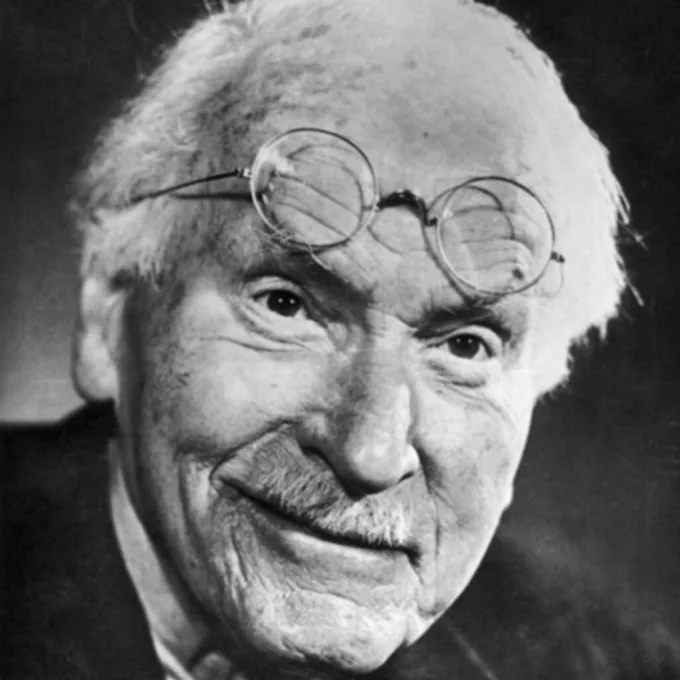
Carl Jung
The extrovert ideal
Susan Cain famously described the “extrovert ideal”: western culture’s preference for charismatic, outgoing, socially confident leadership.
We should not overcorrect. Extroversion has genuine leadership strengths.
Extroverted leaders can bring energy to a room, mobilise people quickly, create momentum and communicate reassurance when anxiety is rising. In media interviews, investor briefings, operational incidents and public-facing moments, that ability to project confidence can be extremely valuable.
Energy has particular reasons for valuing it. Parts of the industry grew up around difficult physical environments, safety-critical operations and command structures where hesitation could be costly. Offshore oil and gas, field operations, control rooms and trading environments have often rewarded decisiveness, toughness and visible situational authority.
Those norms did not come from nowhere.
The problem begins when visible confidence becomes the default test of leadership potential. The person who speaks first is assumed to be decisive. The person who holds the room is assumed to hold the answer. Or, the person who sounds certain is assumed to have reduced uncertainty.
Sometimes they have. And sometimes they just got to the microphone faster.
The quiet advantage
Introverted leadership is too often framed in soft terms: good listener, thoughtful colleague, calming presence. All true, perhaps, but incomplete.
The sharper advantage is independent judgment.
Quieter leaders are less inclined to act with certainty before they have tested the argument. They are more willing to sit with complexity, notice weak assumptions and resist the gravitational pull of group consensus. They may prepare more thoroughly because they do not rely on improvising authority in the moment. They tend to ask awkward question after everyone else has agreed that the meeting has gone terribly well.
This matters because the cost of groupthink in energy can be high.
A board can become too confident about a project timeline. An executive team can talk itself into a position that sounds neat internally but collapses on contact with external stakeholders. A leadership group can mistake political momentum for deliverability.
Introverted leaders can help slow that down.
Not because they are always wiser. Introverts are perfectly capable of being wrong, and sometimes at impressive length.
But habits often associated with introversion – reflection, preparation, observation, precision – are valuable correctives in environments where pace and confidence can become self-reinforcing.
The question is not which personality type is better.
The question is what the moment requires.
Why this matters in energy now
The energy transition is changing what leadership communication must do.
The old model often assumed communication followed decision-making. Leaders decided, then communicators explained. In a simpler environment, that was sometimes adequate. In today’s energy system, it doesn’t come close.
Communication now shapes whether decisions can be made at all. It affects investor confidence, employee alignment, stakeholder consent, political trust, customer understanding and partner commitment. The narrative is core to the operating environment.
That places a premium on leadership teams that can combine different communication and engagement strengths.
The danger of impostor extroversion
Many organisations say they want different leadership styles. Then they quietly reward only one. They ask quieter leaders to “have more presence”, when they mean “speak more often”.
They urge technical experts to be “more commercial”, when they mean “sound more polished”. They tell thoughtful executives to “be more confident”, when the real issue is that the organisation has not learned to distinguish between confident and correct.
The result is impostor extroversion.
This is where introverted leaders are pushed to perform a version of authority that does not suit them. They over-speak, over-gesture, over-simplify, over-network and generally attempt to become the sort of person who appears to enjoy breakfast panels.
This is exhausting for them and not especially useful for the organisation – or the audience.
The better approach is not to leave introverted leaders alone and hope their wisdom eventually seeps through the carpet. Leadership communication still requires development. Quiet authority needs structure, message discipline, audience awareness and practice. Media handling, political engagement and executive communication are learnable skills.
But coaching should build authentic range, not personality theatre.
An introverted leader can learn to be clear, concise and compelling without pretending to be the hosting the Oscars. An extroverted leader can learn to pause, listen and test assumptions without losing energy.
Better leadership conversations
The practical implications are not complicated.
Senior teams should design important conversations so that the fastest voices do not always shape the decision. Share materials early. Ask for written views before the meeting. Invite challenge explicitly. Separate idea generation from decision-making. Use pre-mortems. Give someone the role of testing assumptions. Do not treat silence as agreement. Do not treat fluency as evidence.
This is where psychological safety matters. Amy Edmondson’s influential research on this topic, including her groundbreaking 1999 paper, showed the importance of team environments where people can speak up, ask questions, report mistakes and challenge assumptions without fear of humiliation or punishment.
If people cannot challenge a weak assumption internally, the market may do it later, more brutally and with less concern for everyone’s diary.
Good leadership communication therefore has to work in two directions. Leaders must communicate outward with clarity and confidence. But they must also communicate inward in ways that bring out the best available judgement before decisions harden.
A practical sense check
For leadership teams, the question is not whether they have introverts or extroverts around the table. They do.
The more useful questions are:
- Who tends to dominate our high-pressure conversations?
- Who speaks least, and what might we be missing?
- Do we confuse speed with decisiveness?
- Do we confuse fluency with judgment?
- Where are we at risk of agreeing too quickly?
- Are we coaching leaders to communicate better, or simply to project confident authority?
- Would our crisis response, media handling or stakeholder engagement improve if we had more preparation before performance?
- And perhaps most importantly: do we have enough dissent in the room before we meet it outside the room?
For energy leaders, this is not about celebrating introverts at the expense of extroverts. That would simply replace one lazy ideal with another.
The strongest leadership teams need both.
They need leaders who can project confidence when people need reassurance. They need leaders who can slow the room down when confidence starts to tip into complacency. They need people who can speak under pressure, and people who can think before the pressure is on.
In a sector this complex, progress depends on whether leaders can instil confidence, achieve alignment and earn trust.
Those qualities are not built by volume alone.
They are built by leaders who know when to speak, when to listen, when to challenge and when to make space for the person who has not yet said the thing everyone needs to hear.
Don’t get led astray into a debate about quiet leadership versus loud leadership. Combining the best of both results in disciplined leadership.
And the energy industry needs more of it.